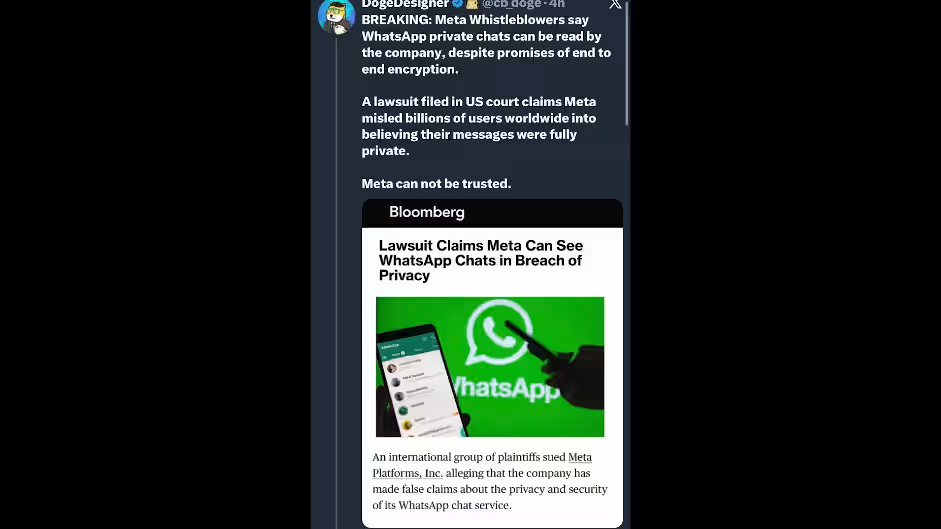
A major legal and privacy dispute has erupted around WhatsApp, the world’s most used messaging app, with an international class-action lawsuit filed against Meta Platforms in the United States claiming the company can read private chats despite promoting “end-to-end encryption” to billions of users. As observed in the latest updates, this case has triggered industry debate, strong public reactions from tech leaders, and renewed scrutiny on how private messaging systems actually work — especially in large-scale platforms that also serve advertising and business features.
The lawsuit, filed in a U.S. district court in San Francisco by users from India, Brazil, Australia, Mexico, and South Africa, alleges that Meta has misled users about WhatsApp’s encryption protections. Plaintiffs claim unnamed internal sources suggest that WhatsApp and Meta can store, analyse, and access what are marketed as “private” conversations — effectively allowing worker access to chats despite promises that only sender and recipient can see them.
In response, Meta and WhatsApp have strongly denied all allegations, describing the lawsuit as “frivolous” and “absurd.” WhatsApp has reiterated that messages are protected by end-to-end encryption using the widely trusted Signal protocol, and that message encryption keys are stored only on users’ own devices, which prevents Meta from seeing chat contents. Meta has even threatened to seek sanctions against the lawyers behind the case for what it calls a baseless legal claim.
The legal challenge comes at a time when messaging privacy is a top concern for internet users worldwide. WhatsApp’s end-to-end encryption has long been presented as its core privacy feature — meaning message content traveling between sender and recipient is scrambled so no outsiders can read it. Meta’s rebuttals emphasize that only metadata (information such as who messaged whom and when) might be processed or stored for platform operations, not the private contents themselves.
Criticism has not been limited to legal filings. Industry figures including X owner Elon Musk have weighed in publicly, urging users to reconsider WhatsApp’s safety and even promoting his own messaging product, X Chat, as a more secure alternative. Musk has said “WhatsApp is not secure” and extended his skepticism even to Signal, another encrypted messaging app, in his social media posts.
Telegram founder Pavel Durov also joined in, accusing WhatsApp’s encryption implementation of having vulnerabilities and questioning whether the platform’s security model lives up to its public image. Such comments from rival tech leaders add to the pressure on Meta to demonstrate the real-world integrity of its encrypted systems.
At the same time, responses from technology leaders beyond social media rivalry highlight deeper structural concerns. Zoho co-founder Sridhar Vembu has argued that companies dependent on advertising revenue can face conflicts of interest between user privacy and business incentives — a point that cuts across the legal arguments and speaks to broader trust issues in the digital economy.
As observed in the latest updates, WhatsApp is also rolling out new privacy-focused features such as “Strict Account Settings” to reassure users and strengthen account protection against external threats. These moves show the platform is attentive to user concerns even as the legal process unfolds.
Why It Matters: This controversy goes beyond one app — it raises important questions about trust in digital communication tools that carry personal and business conversations for billions of people. Messaging platforms are now key parts of daily life, and debates over encryption, data access, and transparency have implications for personal privacy, corporate policy, and how regulators worldwide assess tech company commitments to user security.
Practical Insight: For ordinary users, this issue highlights the importance of understanding what “encryption” really protects and how platform design choices influence privacy. Even where encryption is technically robust, how companies handle metadata, backups, and internal access mechanisms can affect overall user trust.
Conclusion: Based on direct observation of the latest legal filings and industry responses, the lawsuit against WhatsApp and the intense public debate around it underscore the growing tension between user privacy promises and corporate practices in the messaging economy. With Meta defending its technology and critics pushing for greater transparency, the outcome of this dispute could shape how digital privacy standards evolve in the coming years — affecting users, developers, and regulators alike.
SOURCE: Direct monitoring of news updates (Meta/WhatsApp privacy lawsuit – Elon Musk, Pavel Durov reactions).