India’s celebrity business landscape is changing. Actors, cricketers and digital creators are no longer relying only on films, endorsements or social media income. Increasingly, they are putting money into startups, consumer brands and other businesses, turning their public image into a longer-term business asset.
Deepika Padukone, for example, has invested through her investment firm KA Enterprises in several startups, including specialty coffee brand Blue Tokai. Her investment in Blue Tokai was part of the company’s extended Series B round, although the exact amount was not disclosed.
Ranveer Singh has taken a more active approach with Bold Care. He invested in the men’s health and wellness company and became a co-owner and co-founder, giving the brand not only capital but also a strong public face. Bold Care later raised $5 million in Series A funding in 2025.
This raises an important business question: why would celebrities who can potentially earn large amounts from films, advertising campaigns and brand endorsements take the additional risk of investing in startups?
The answer is not simply about making more money. It is about reducing dependence on a single source of income.
Entertainment is a career where attention can change quickly. An actor can be highly successful for several years, but audience interest, box-office performance, brand demand and social media influence can all change. The same principle applies to creators and athletes. A YouTuber may have millions of views today, but there is no guarantee that the same level of attention will continue for the next decade.
That makes business ownership attractive.
Instead of receiving money only when a film is released, an endorsement campaign is signed or content generates views, celebrities can build ownership in businesses that may continue growing independently of their main profession. The goal is to turn short-term fame into long-term assets.
There is another important difference between a celebrity endorsement and a celebrity investment. When an actor simply promotes a product, the relationship can end when the campaign ends. When the celebrity owns equity in the company, the incentive is different. The celebrity has a reason to help the company grow because the value of the investment can rise with the business.
Ranveer Singh’s involvement with Bold Care is a strong example of this model. The company describes him as a co-founder, while Singh has publicly positioned himself as both the face and co-owner of the business. His public image fits closely with a category that previously had limited mainstream advertising space. That gives the company something that traditional advertising alone may struggle to create: attention, recall and a recognisable personality attached to the brand.
The same business logic can be seen in Hrithik Roshan’s journey with HRX. The lifestyle brand was started in 2012, and in 2016 Myntra acquired a 51% stake in HRX, leaving Roshan and Exceed Entertainment with 49%. His association with fitness also helped create a natural connection between the celebrity, the product category and the target consumer.
His partnership with Cure.fit followed a similar model. A reported five-year association valued at ₹100 crore included equity, promotions and royalty linked to the HRX workout offering. This is an important shift in the celebrity economy: instead of treating fame only as something to rent through advertisements, celebrities can use it as part of a larger business model.
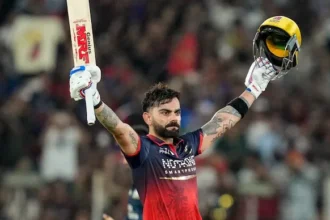
Cricket offers another useful example. Virat Kohli and Anushka Sharma invested in Go Digit in 2020. Kohli purchased 266,667 shares for ₹2 crore, while Sharma purchased 66,667 shares for ₹50 lakh. Following Go Digit’s stock-market listing in 2024, reports valued their combined holdings at around ₹10 crore at one point. This shows the potential upside of early investments, although it is important to remember that startup and equity investments can also lose value.
For celebrities, the attraction is therefore not only the possibility of a high return. It is also diversification.
A successful actor may have a strong income today, but building a portfolio of businesses creates another financial layer. A creator can use the same strategy by moving from advertising revenue into ownership of brands, technology companies or consumer businesses. An athlete can use public recognition to support businesses in areas where their personal reputation has a natural connection.
This is why the creator economy is increasingly moving toward entrepreneurship.
The celebrity’s biggest advantage is often not business expertise. It is distribution.
A startup can spend heavily on advertising to reach millions of people. A celebrity can potentially reach those people through an existing audience. That can lower the cost of building awareness and help a new product gain attention faster. But attention alone does not make a business successful. The product, pricing, operations, customer retention and financial performance still have to work.
This is also why celebrities generally work with founders, professional managers and experienced business teams rather than trying to run every part of the company themselves. Their role can involve capital, brand strategy, public visibility and network access, while the operating team handles the day-to-day business.
For startup founders, this creates a powerful proposition. A celebrity investor can bring money, credibility, media attention, social media reach and access to a wider consumer base. In some cases, the value of that network may be more important than the celebrity’s investment itself.
However, there is a major risk that both celebrities and founders need to understand. Celebrity influence cannot compensate for a weak business model.
A famous person may generate millions of views for a product, but customers will not continue buying it simply because a celebrity is associated with it. Long-term brand value comes from product quality, customer trust, repeat purchases and sound business strategy.
There is also a difference between celebrity-backed businesses and celebrity-owned businesses. The former may use a star mainly for marketing, while the latter gives the celebrity a direct economic interest in the company’s success. That distinction matters when evaluating the real business impact of a celebrity partnership.
For ordinary investors and entrepreneurs, there is a useful lesson here. You do not need a celebrity’s wealth to follow the same basic strategy. The underlying principle is diversification: do not depend entirely on one income source if your career is exposed to changing demand.
For celebrities, the approach can also protect brand value. A successful business can keep their name connected with consumers even during periods when they have fewer films, fewer campaigns or less media attention. For creators, startups and brands, celebrity partnerships can create a similar effect by converting social media influence into a longer-term commercial relationship.
The growth of this model also shows how the meaning of celebrity is changing in India. Fame is no longer limited to entertainment. It is increasingly becoming a business asset that can be used across consumer brands, technology, wellness, food, fashion and financial services.
As observed in recent business and platform activity, the strongest celebrity investments tend to have a clear connection between the person’s public identity and the business they support. Deepika Padukone’s investment portfolio has included consumer-focused startups, while Hrithik Roshan built HRX around fitness and Ranveer Singh’s involvement with Bold Care connects his public personality with men’s wellness.
Vivek Oberoi offers another example of the move beyond cinema. In recent comments, he said his family office had invested in more than 30 companies and exited 11, showing how some celebrities are developing investment activity that goes well beyond traditional brand endorsements.
The broader lesson is simple: celebrity wealth is increasingly being treated as capital that can be deployed, rather than money that simply sits outside the entertainment business. The Creator Economy, Brand Endorsements and Startup Investing are becoming more connected, creating a model where influence can support ownership and ownership can strengthen long-term brand value.
At the same time, past celebrity investments should not be treated as proof that every startup investment will succeed. Startup valuations, private-company stakes and investment returns can change significantly, and publicly reported figures may represent estimated or market-based values rather than realised cash profits.
For anyone looking to approach a celebrity investor, the smarter route is also not simply to send a cold message and ask for funding. Understanding the celebrity’s investment portfolio, business partners, professional network and preferred sectors can provide a much better starting point. A strong pitch still needs a clear business model, market opportunity, financial plan and reason why that particular celebrity is strategically relevant.
Ultimately, the rise of celebrity startup investing reflects a bigger change in the Indian business ecosystem. Actors, athletes and creators are increasingly moving from being paid only for their attention to owning a part of the businesses competing for that attention. For startups, that can mean faster brand awareness and stronger consumer trust. For celebrities, it can create diversification and potential long-term wealth. And for the wider creator economy, it signals a shift from earning from fame to building businesses around it.
SOURCE: Review of recent online discussions and official platform signals.
Verification note: Investment amounts, valuations and returns mentioned above are based on publicly reported information available from the cited sources. Private-company stakes and estimated investment values can change, so readers should rely on company filings or official announcements for the latest financial details.