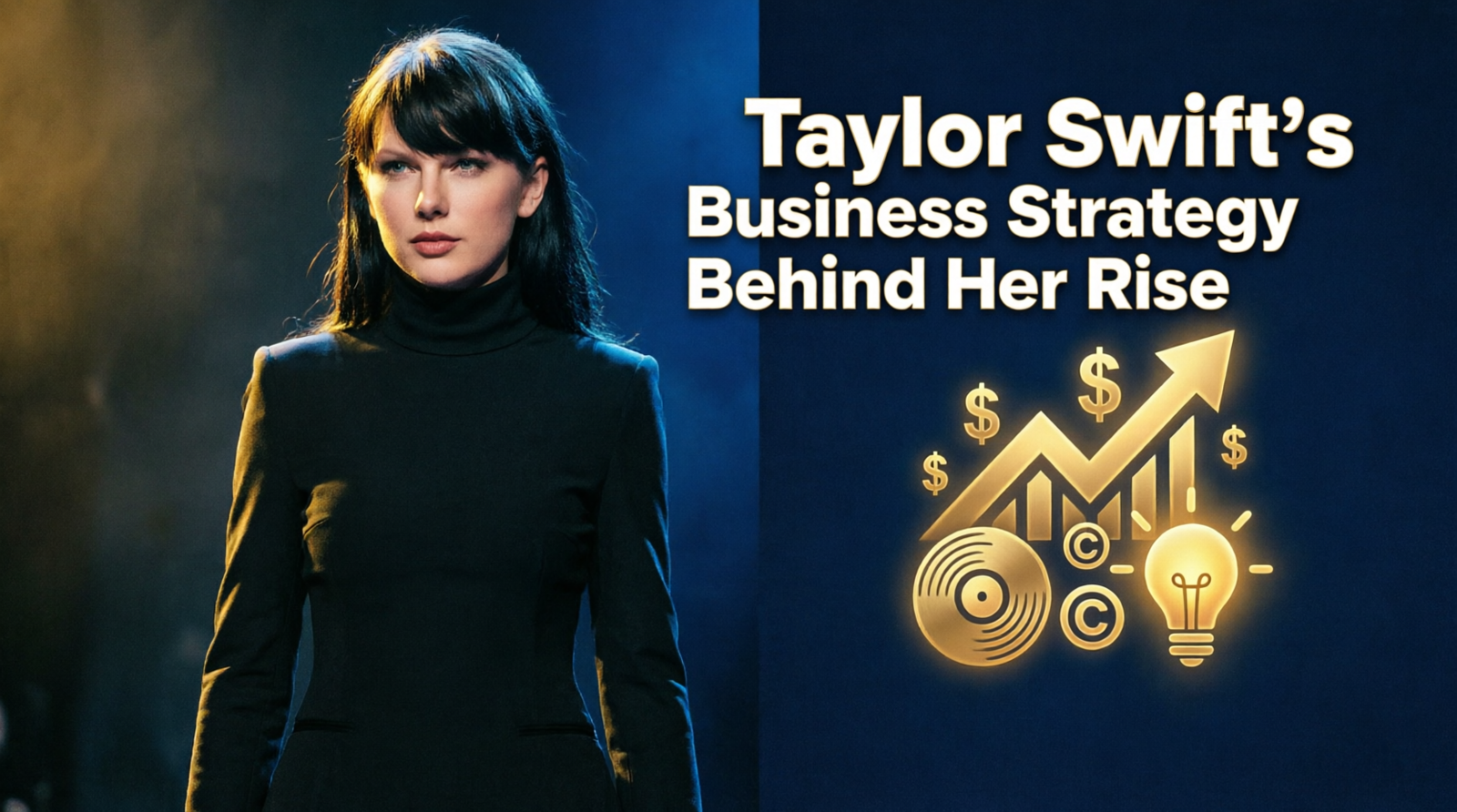
Taylor Swift is more than a global music star. Her career shows how personal branding, storytelling, fan engagement, and business strategy can turn an artist into a powerful global brand.
From her early move to Nashville to the success of The Eras Tour, Swift has built a career around staying connected with her audience while changing with them. Her journey also highlights a major issue in the music industry: who owns an artist’s work and how much control creators should have over their own brands.
Swift began pursuing music seriously as a teenager and moved to Nashville to enter the country music industry. The decision placed her close to the people, labels, and opportunities that could help develop her career. It also offers a useful business lesson: talent alone is not always enough. Being in the right market and being ready when an opportunity appears can make a major difference.
Her early success came from something that later became one of her strongest marketing advantages: relatability. Swift’s early music focused heavily on teenage relationships, growing up, dreams, and heartbreak. As her audience became older, her music also changed. Albums such as Speak Now, Red, 1989, Reputation, and later releases explored new stages of relationships, identity, fame, confidence, and personal growth.
This created a powerful connection between the artist and her audience. Instead of constantly searching for a new audience, Swift continued developing with the people who were already listening to her. From a business perspective, this is a strong example of customer retention through evolving brand identity.
The strategy became even more powerful because her music often gave fans a way to connect their own experiences with her stories. That connection helped turn listeners into a highly engaged fan community. In today’s Creator Economy, where attention is one of the most valuable assets, that type of long-term relationship can be more important than a single viral moment.
Swift’s career also shows how conflict can change an artist’s public identity. The 2009 MTV Video Music Awards incident involving Kanye West became a major moment in her public story. Years later, disputes around her music catalog further changed the conversation about artist ownership.
The issue became especially important when Scooter Braun’s Ithaca Holdings acquired Big Machine Label Group, the company that owned the master recordings of Swift’s first six albums. Swift had previously signed with Big Machine, meaning the original master recordings were controlled by the label.
Rather than simply accepting the situation, Swift chose to re-record her earlier albums. The Taylor’s Version strategy created a rare situation in the music business: an artist began competing against recordings of her own songs while encouraging fans to support versions that she owned.
This was not only a music decision. It was a major business strategy. The re-recordings gave Swift greater control over how those recordings could generate future revenue through streaming, sales and licensing.
The strategy also changed the wider discussion around music ownership. For artists and creators, the lesson is clear: creative work can become a valuable business asset, and understanding who owns that asset is just as important as creating it.
Swift’s relationship with major technology companies also strengthened her image as an artist willing to challenge industry practices. In 2015, she criticized Apple’s initial decision not to pay artists during its free Apple Music trial. Apple later changed its policy and said artists would be paid during the trial period.
Whether viewed as a marketing move, an artist-rights campaign, or both, the episode showed the value of using social media influence to bring an industry issue directly to consumers.
Her biggest commercial example came with The Eras Tour. The tour became far more than a series of concerts. It created demand across ticketing, travel, hotels, restaurants, merchandise, entertainment and local businesses.
The wider economic impact is important because it shows how a strong entertainment brand can create value far beyond its primary product. A concert ticket may generate revenue for the artist, but the audience also spends money on flights, hotels, food, transport, clothing and other experiences.
That is where Swift’s brand value becomes particularly significant. Her audience is not simply buying music. Fans are buying into an experience, identity and community built around the artist.
Her concert film further extended that business model by taking the tour experience into cinemas and reaching people who could not attend a live show. This demonstrates another important marketing principle: a strong brand can turn one successful product into several connected revenue streams.
The larger lesson for creators, athletes, influencers and businesses is that long-term success rarely comes from one viral success. Swift’s career shows the value of building a system around an audience, continuously changing the product, protecting intellectual property and creating reasons for customers to remain engaged.
For creators, the most useful takeaway may be ownership. Building an audience on someone else’s platform can create reach, but owning your content, brand assets and commercial rights can provide greater control over long-term net worth impact.
For businesses, the lesson is equally relevant. Strong storytelling can turn customers into communities. A recognizable brand can make new products easier to launch. And a loyal audience can create demand across multiple categories.
For the Creator Economy, Swift’s career is a strong case study in how personal branding can become a business asset. Her influence comes not only from music but from the trust, attention and emotional connection she has built over many years.
As observed in the latest public discussions around Swift’s career and business moves, her success is best understood as a combination of creative talent and deliberate brand management. Claims about exact earnings, valuations and economic impact can vary by source and calculation method, so readers should rely on official financial reports and verified industry data for precise figures.
Ultimately, Taylor Swift’s rise is not simply a story about becoming a successful singer. It is a case study in brand building, audience retention, creator ownership and business strategy. Her ability to evolve with her audience while maintaining a clear identity has helped turn an individual artist into a global entertainment brand.
For anyone building a business, creator career or personal brand, the central lesson is simple: create something people connect with, keep evolving, protect what you own, and give your audience a reason to stay for the long term.
SOURCE: Independent monitoring of publicly accessible digital platforms.