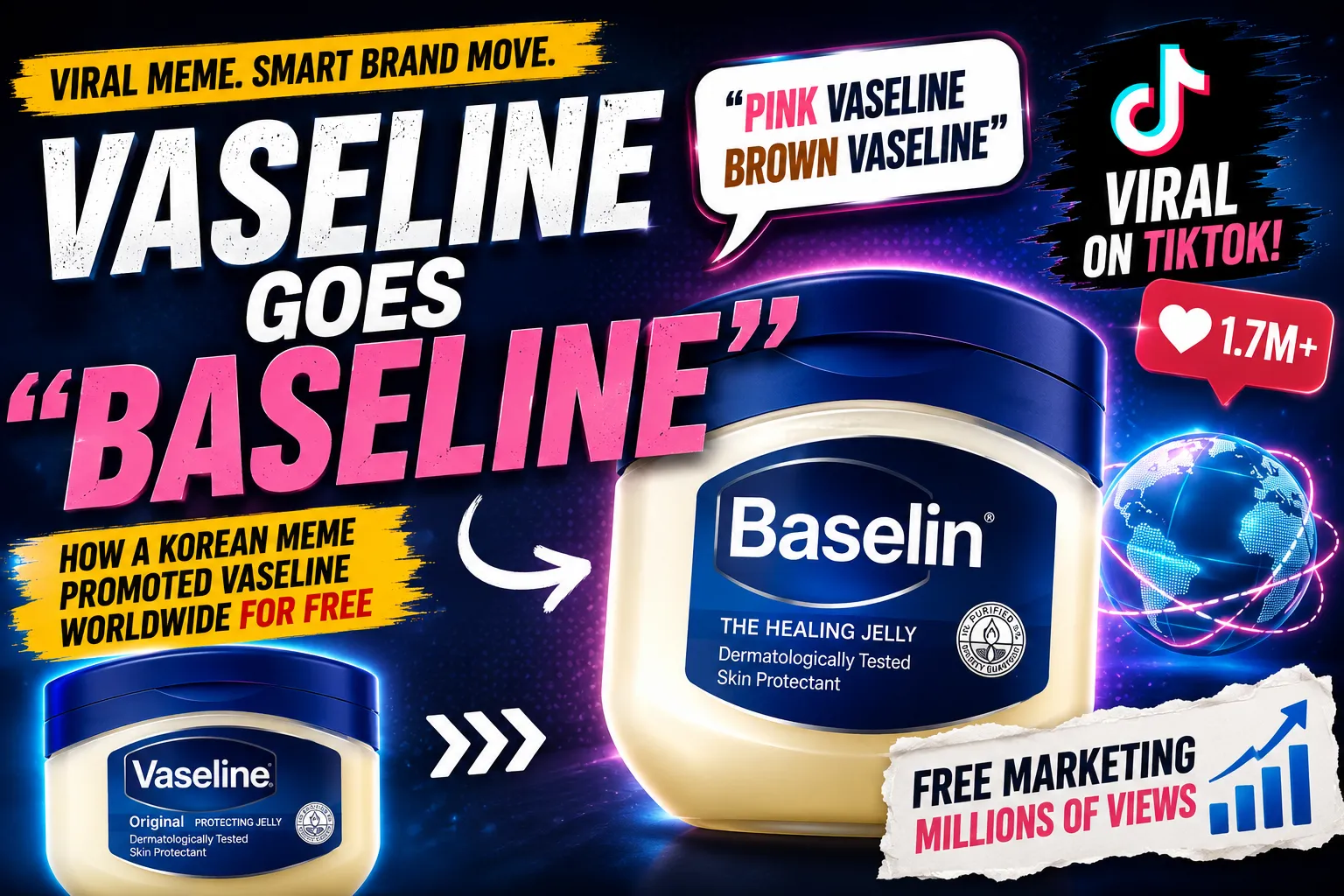
You may have already seen the internet’s latest beauty meme: “pink Vaseline, brown Vaseline.” What started as a simple skincare video from Korean creator Min Day Lee unexpectedly turned the brand name Vaseline into “Baseline” across social media. The clip was not created as a paid advertisement or a formal brand promotion. Instead, Lee’s playful pronunciation and energetic delivery caught viewers’ attention, turning a normal beauty video into a widely repeated internet sound.
The interesting part, however, is not only how the video went viral. It is what happened after the internet picked it up. As the audio spread across platforms, users began repeating “Baseline,” creating reaction videos, remixes and jokes around the phrase. The trend moved beyond skincare and became a piece of social media culture in its own right.
The pronunciation itself also has a real language explanation behind it. Korean does not have a native sound that directly matches the English “V” sound, so words containing “V” can sometimes be pronounced closer to a “B” sound. In Lee’s case, that difference helped turn “Vaseline” into something that international audiences heard as “Baseline.” But the pronunciation alone would probably not have been enough. Her tone, repetition and memorable delivery made the phrase easy to copy, which is a key part of why the clip became a strong social media meme.
That is where the story becomes particularly useful for marketers. Viral content does not always begin with a carefully planned campaign. Sometimes, a creator produces a small piece of content for entertainment, and the audience creates the marketing opportunity themselves. In this case, the audience did much of the distribution work by repeating the sound and adapting it to new videos.
Vaseline then made a smart business move: instead of ignoring the joke, the brand joined it. Its social media presence temporarily adopted the “Baseline” idea, turning the internet joke into part of the brand conversation. Reports on the campaign say the change was a social-media joke rather than a legal name change; the actual Vaseline brand and products remained unchanged.
This distinction matters because it shows how modern brand marketing is changing. A company does not always need to create the original viral moment. Sometimes the better strategy is to recognize an organic trend early, understand why people are engaging with it, and then participate without taking control away from the community.
For Vaseline, the potential value goes beyond a few viral posts. The brand received attention from people who may not have been actively searching for skincare products. The name itself became part of jokes, captions, sounds and user-generated content. That creates repeated brand exposure without requiring every piece of content to look like a traditional advertisement.
It is also a strong example of Social Media Influence and the growing Creator Economy. Lee created the original moment, but the audience expanded it. Other creators became distributors of the trend by making their own versions. The brand then entered the same conversation. This creates a simple viral loop: creator moment → audience reaction → creator remixes → brand participation → more audience content.
That loop is valuable because every new participant can introduce the brand to another audience. Instead of relying only on paid Brand Endorsements, companies can sometimes gain much wider attention by becoming part of an existing cultural moment.
There is another important lesson here for smaller businesses and local disruptors. A viral strategy does not always require a huge advertising budget. The most important asset can be the ability to react quickly. A small brand that notices an emerging joke, phrase, customer comment or creator trend early may have an opportunity to become part of the conversation before larger competitors notice it.
However, there is also a limit to this strategy. Not every viral joke should be adopted by a company. A brand needs to consider whether the trend fits its identity, audience and products. Trying to force every meme into a marketing campaign can make a company look disconnected rather than relevant. The Baseline moment worked because the joke was directly connected to the brand name and product, making the response feel natural.
The creator side is equally important. Lee did not appear to be building a traditional advertisement when the original video was posted. That is precisely what made the moment feel organic to viewers. For creators, this shows the value of personality and repeatable content. A technically perfect video is not always the one that travels furthest. Sometimes a simple phrase, expression or delivery style can become more memorable than the original subject of the video.
For consumers, the story is a reminder of how quickly social media can change the meaning of ordinary content. A video can begin as a joke, become an audio trend, turn into a meme and eventually become a marketing opportunity for a global brand—all within a short period.
From a business strategy perspective, Vaseline’s response is therefore more interesting than the joke itself. The company effectively allowed the audience to write part of the campaign. Instead of spending heavily to create a new message from scratch, it entered a conversation that already had attention, emotion and participation.
The exact reach and commercial impact of the trend should not be treated as the same thing as direct sales. Viral views do not automatically equal purchases, and public social-media activity alone cannot establish a specific Net Worth Impact or revenue increase. What can reasonably be observed is the increase in brand visibility, user participation and cultural relevance surrounding the Vaseline name.
Based on recent social media activity and digital updates, the “Baseline” moment is best understood as a case study in organic viral marketing, rather than a conventional advertising campaign. While online reports provide useful context, specific claims about campaign performance, sales or commercial results should be confirmed through official brand statements or company disclosures.
The bigger lesson is simple: brands do not always need to manufacture virality. Sometimes the smarter strategy is to listen, react quickly and give the internet room to do what it does best.
SOURCE: NightiConsulting