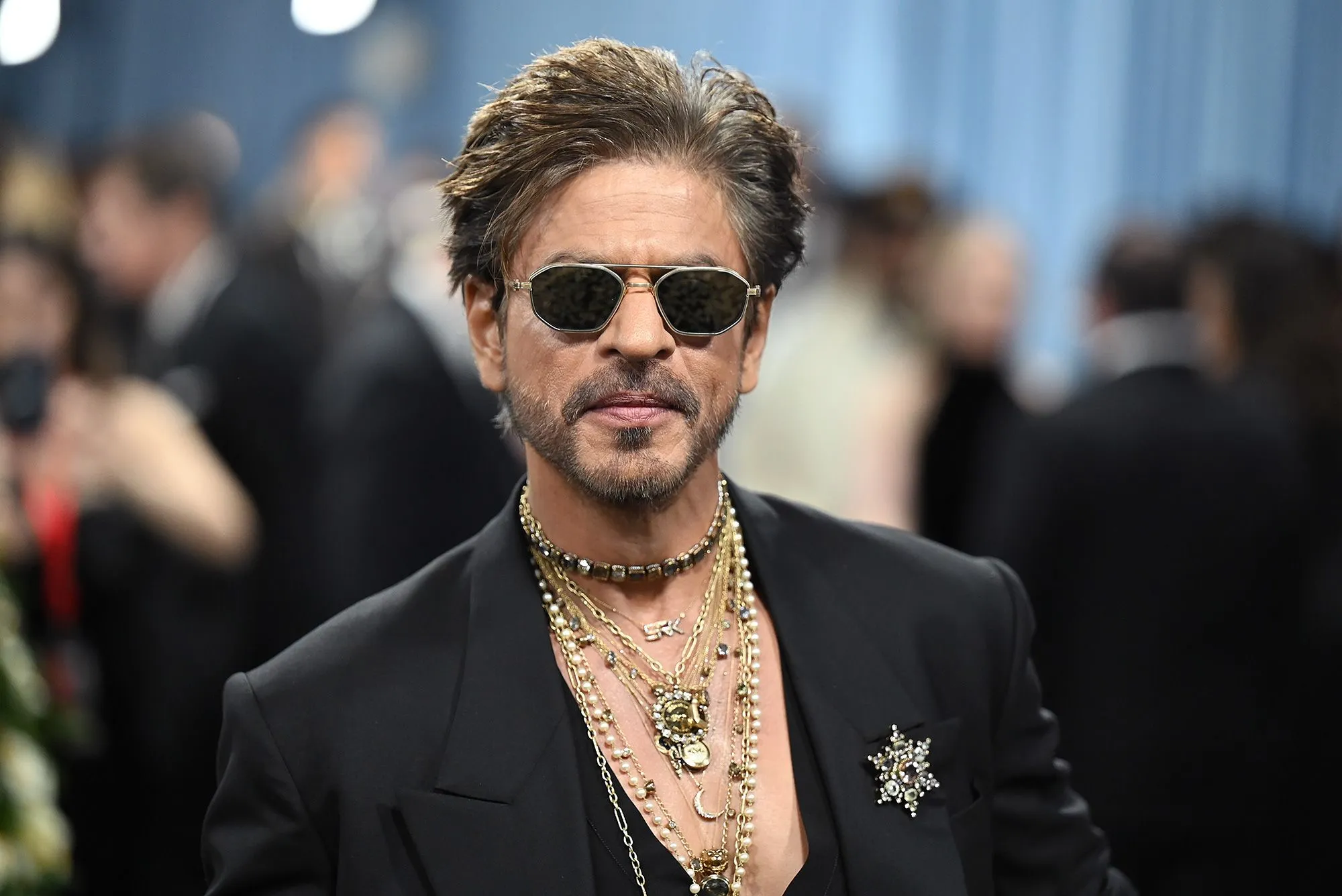
Indian superstar Shah Rukh Khan made headlines on October 1, 2025, when the Hurun India Rich List 2025 estimated his wealth at ₹12,490 crore, or around $1.4 billion. The valuation placed the Bollywood star among the world’s wealthiest entertainers and made him the first Indian actor to enter the billionaire club, according to the report. His success also highlights an important change in the entertainment industry: a star’s wealth can grow far beyond movie salaries when acting, business ownership, brand endorsements and sports investments work together.
For many years, Shah Rukh Khan was known mainly for his acting career, romantic films and strong connection with audiences. However, his financial journey tells a much bigger story. Instead of depending only on the success of his films, he built a business network that includes film production, visual effects, cricket franchises and brand partnerships. This mix of income sources helps explain why his estimated wealth is so high compared with that of many other actors.
It is important to understand that a reported net worth of $1.4 billion does not mean Shah Rukh Khan has that amount sitting in a bank account. Net worth is an estimate of a person’s assets and business interests after accounting for liabilities. The value of privately owned companies and sports franchises can also change over time. Hurun’s figure should therefore be understood as an estimate published in 2025, rather than a fixed amount of cash or a guaranteed measure of his current wealth.
Shah Rukh Khan entered the Hindi film industry with Deewana in 1992. Instead of following only the traditional path of a romantic hero, he took on challenging roles in films such as Baazigar, Darr and Anjaam. These performances helped him build a distinct identity at a time when many actors were competing for similar leading roles. His early career showed that taking calculated risks could help create a stronger position in a competitive industry.
His approach to business became more visible when he started working on film production. Shah Rukh Khan joined actress Juhi Chawla and filmmaker Aziz Mirza to establish Dreams Unlimited. The company backed films such as Phir Bhi Dil Hai Hindustani and Asoka. Although these projects did not all perform well commercially, the experience gave him an early look at the financial risks involved in making films.
In 2002, Dreams Unlimited was transformed into Red Chillies Entertainment, the production and entertainment company associated with Shah Rukh Khan and his wife, Gauri Khan. Over time, the company became involved in films such as Main Hoon Na, Om Shanti Om, Chennai Express and Jawan. This business model allowed Khan to participate in more than the acting side of filmmaking.
The difference is important. An actor who receives a fee for a film generally earns from that agreement. A person who also owns part of the production business may benefit from the value of the company and its wider commercial activities. Ownership can create opportunities for long-term growth, although it also comes with costs, business risks and the possibility of losses.
Red Chillies Entertainment also expanded into visual effects through Red Chillies VFX, established in 2006. As visual effects became more important to large-scale Indian films, specialist studios gained opportunities to work across different productions rather than depending on a single movie. This gave the business a potential source of income beyond Shah Rukh Khan’s own acting projects.
The wider lesson is that changes in an industry can create new business opportunities. A company that builds technical skills, production systems and a strong reputation may serve several clients and projects. However, claims about its annual revenue, market value or contribution to Khan’s personal fortune should be checked against reliable company information before being presented as confirmed figures.
Another major part of his business journey is the Indian Premier League. In 2008, Shah Rukh Khan became a co-owner of the Kolkata Knight Riders alongside business partners. At the time, the IPL was a new competition, and the long-term commercial value of its franchises was still developing.
The league went on to become a major sports and entertainment property, combining cricket, television, sponsorships and digital audiences. Kolkata Knight Riders won IPL titles in 2012, 2014 and 2024, helping strengthen the team’s sporting profile and connection with fans.
Khan’s involvement in cricket also grew beyond India through the Knight Riders brand, which has been linked to teams in the Caribbean Premier League, Major League Cricket in the United States and the UAE’s International League T20. These investments show how a familiar sports brand can expand into different markets, although each franchise has its own costs, ownership structure and financial results.
For a celebrity investor, the value of a sports team is not limited to match results. Sponsorship deals, media rights, merchandise, ticket sales and the wider reputation of a league can all affect its commercial appeal. At the same time, a franchise’s estimated market value is not the same as its yearly profit. It would therefore be misleading to treat every increase in team value as money that the owner has already earned.
Shah Rukh Khan’s business interests also extend to brand endorsements. His public image, long career and ability to connect with audiences make him an attractive partner for companies seeking visibility and consumer trust. Endorsements can provide income between film releases and help brands reach people across different age groups and markets.
This is part of the wider creator economy, in which a person’s public identity becomes a commercial asset. Actors, athletes and digital creators can earn through advertising, partnerships, appearances and ownership of businesses. The most useful lesson for other professionals is not to copy a celebrity’s individual deals, but to understand how reputation, audience trust and a clear brand identity can create opportunities beyond a main job.
However, the size of endorsement fees and the number of active brand partnerships often vary between reports. Without reliable confirmation, such figures should be treated as estimates rather than exact earnings. The same caution applies to claims about how much Khan earns from weddings, public appearances or individual commercial agreements.
His financial journey has also included setbacks. Not every film has been a success, and not every investment in a new business has produced strong returns. Shah Rukh Khan has been associated with ventures beyond cinema, including investments in digital and technology businesses. Some did not gain the level of attention or market position that their early promise may have suggested.
These experiences matter because successful investors are not people who always make the right decision. They are people whose overall strategy may remain strong despite individual failures. A business portfolio with different sources of income can reduce dependence on one area, but diversification does not remove risk or guarantee a profit.
Khan’s acting career also faced a difficult period before his return to the box office with Pathaan and Jawan in 2023, followed by Dunki. The three films generated major commercial attention, and their reported combined box-office business was widely discussed. Still, box-office collections should not be confused with the money an actor personally receives. Ticket revenue is shared across exhibitors, distributors and other parties, while production costs and marketing expenses affect a film’s final financial result.
His comeback illustrates how an established public figure can regain commercial momentum when new work connects with audiences. A successful release can support future brand partnerships, increase interest in older films and strengthen the value of related businesses. But a single successful year does not explain an entire fortune built over decades.
The Hurun India Rich List 2025 brought these different parts of Khan’s career into focus. Its estimate of ₹12,490 crore reflected the reported value of his overall wealth and business interests, rather than only his earnings from acting. The list also placed other Indian entertainment figures, including Juhi Chawla and Hrithik Roshan, among the country’s wealthiest celebrities. These comparisons show how business ownership and investments can create large differences in estimated wealth, even among people working in the same industry.
There is also a broader business lesson for people who are not actors or professional investors. Building wealth often involves increasing earning power, keeping a share of the value created, and using some of those earnings to build assets over time. For a small business owner, that might mean investing in equipment, developing a product or building a customer base. For a creator, it could mean owning original content or developing a service rather than depending entirely on advertising income.
The risks need equal attention. Celebrity investments often involve large teams, business partners, legal advice and access to capital that ordinary people may not have. A decision that makes sense for a wealthy investor could be unsuitable for someone with limited savings. It is better to learn from the general principles of ownership and diversification than to copy individual investments without understanding their costs.
Shah Rukh Khan’s journey also highlights the business value of long-term audience relationships. His screen presence helped build public recognition, but his business interests gave that recognition several ways to create value. Film production, visual effects, cricket franchises and brand partnerships each serve different markets, allowing his wider business network to operate beyond the release schedule of his films.
His reported billionaire status is therefore more than a celebrity wealth headline. It offers a useful example of how entertainment careers can develop into broader business ventures when a public figure combines creative work with ownership and long-term planning. The outcome is not guaranteed, and private business valuations remain uncertain, but the underlying principle is clear: income from work and wealth from ownership are two different things.
Based on publicly available reports and recent business coverage, Shah Rukh Khan’s reported $1.4 billion fortune in the 2025 Hurun India Rich List reflects decades of acting success alongside a wider set of commercial interests. Readers should consult official company announcements and published financial records where available for further details, as privately held business valuations and celebrity net-worth estimates may change.
SOURCE: Independent monitoring of publicly accessible digital platforms, with context from published coverage of the Hurun India Rich List 2025.