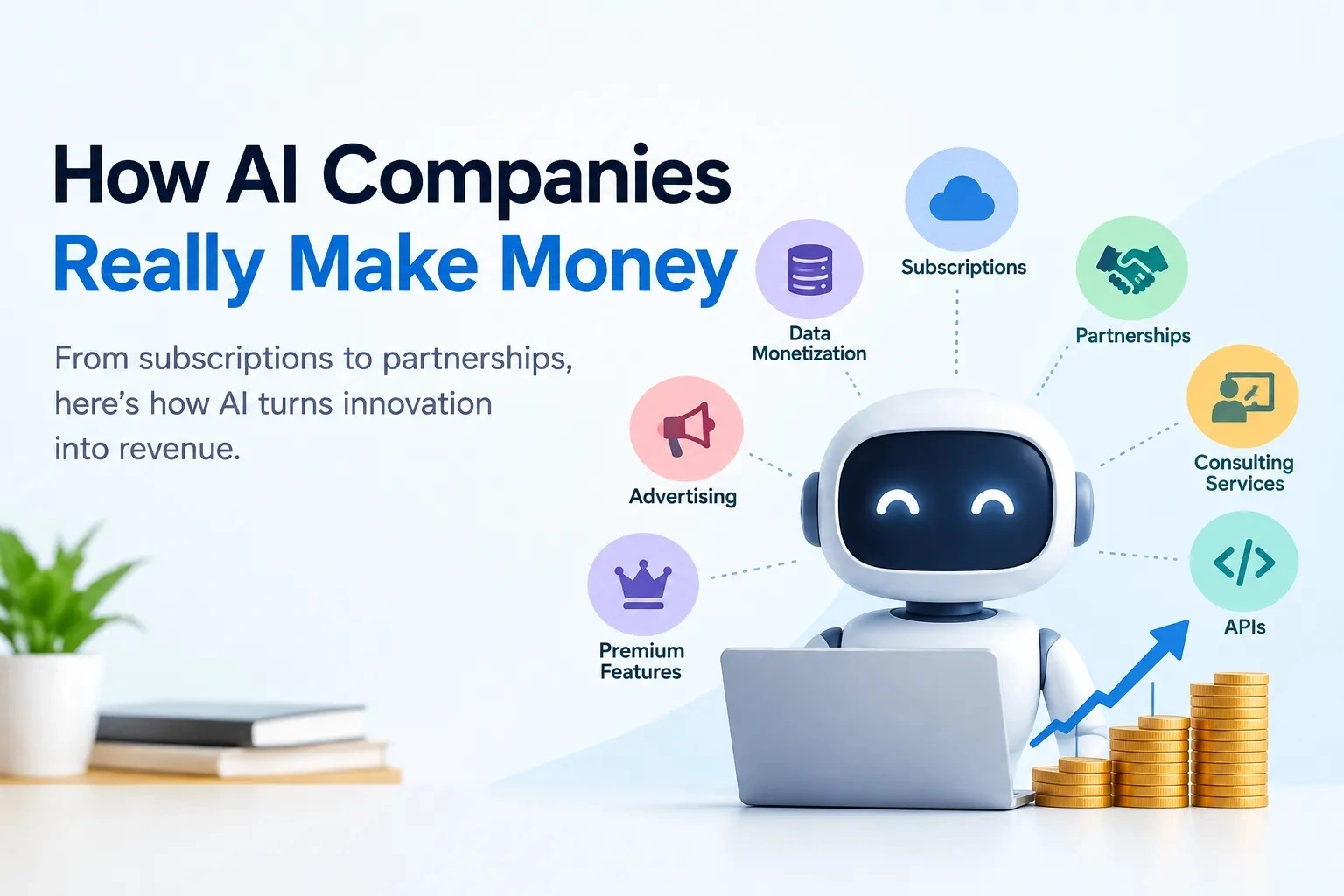
AI companies use several business models to turn artificial intelligence into recurring revenue. Subscriptions, APIs, enterprise contracts, consulting and partnerships are among the main ways AI businesses monetize their technology.
The AI industry is no longer limited to selling software or consumer devices. Companies are increasingly selling access to AI models, computing power, specialized tools and business solutions. This shift is important because it changes how AI companies build revenue, manage costs and compete for customers.
Subscription plans are one of the most visible models. Customers pay monthly or annual fees to use AI-powered software, automation tools or advanced features. For businesses, recurring subscriptions can provide a more predictable revenue base while allowing customers to avoid large upfront costs.
Enterprise contracts are another major part of the market. Large companies may pay AI providers to build or integrate systems for tasks such as customer support, data analysis, fraud detection, document processing or workflow automation. These deals can be more complex than standard software subscriptions because they may include implementation, technical support, security requirements and ongoing services.
APIs have also become an important part of the AI business model. Instead of using an AI application directly, developers can connect an AI model to their own software through an API. Customers are generally charged according to usage, such as the amount of data processed or the number of requests made. This creates a direct link between customer activity and revenue.
Consulting and professional services provide another revenue channel. Many organizations want to use AI but do not have the internal teams needed to select models, prepare data, build systems or manage deployment. AI companies and specialist firms can charge for this expertise alongside their technology.
The idea of data monetization needs more careful context. While data can support AI development and business intelligence, companies cannot simply treat all collected data as an asset that can be sold freely. Privacy laws, contracts, consent requirements and data-security rules can restrict how personal or sensitive information is used. In practice, many AI businesses create value from data by analyzing it, improving models or producing business insights rather than directly selling raw personal data.
The freemium model is also common across the wider AI software market. A company may provide basic features at no cost and charge for higher usage limits, advanced models, business features or additional support. This approach can reduce the barrier for new users while creating opportunities to convert heavy users and businesses into paying customers.
Advertising can play a role, particularly for consumer-facing platforms, but it is not the only way AI businesses generate revenue. The larger commercial opportunity often comes from organizations paying for technology that saves time, reduces operating costs, improves customer service or supports new products.
Partnerships are becoming increasingly important as well. AI companies may work with cloud providers, software firms, device makers or large enterprises to bring AI capabilities into existing products. These relationships can expand distribution and give AI developers access to customers they may not reach on their own.
This business structure also explains why the economics of AI can be different from traditional software. AI companies may face significant costs for computing, model training, infrastructure, data, research and specialist staff. A growing customer base does not automatically mean higher profits if the cost of serving those customers also rises sharply.
For investors, business leaders and ordinary users, this is an important distinction. Revenue growth alone does not show whether an AI company has a strong business model. The more useful questions are how much customers pay, how often they return, how expensive each user is to serve and whether the company can maintain healthy margins as usage increases.
The creator economy is also being affected by these models. AI tools are increasingly used for writing, design, video production, marketing, research and customer engagement. As more creators and small businesses adopt these services, AI companies can reach large numbers of paying users without relying only on major corporate contracts.
Social media influence can further support this growth. AI products that become popular among creators or online communities can gain attention quickly through demonstrations, reviews and user-generated content. However, popularity does not always translate into long-term revenue. Businesses still need customers who see enough value in the product to keep paying for it.
Brand value is another factor. Companies that build trusted AI products can create stronger relationships with enterprise customers and developers. Security, reliability, transparency and responsible data practices can therefore become part of the commercial strategy, not just compliance issues.
For customers, understanding the revenue model can also help when choosing an AI service. A free product may have usage limits, while a subscription may offer more features. An API-based service may be more suitable for developers, while an enterprise contract may make sense for organizations that need custom deployment and support.
The wider AI market is therefore moving toward a mixed revenue structure rather than one single formula. Subscriptions, enterprise services, APIs, consulting, partnerships, premium features and usage-based pricing can all work together. The companies that can connect useful AI technology with a sustainable pricing model will have an important advantage as adoption continues.
Ultimately, the real business of AI is not simply selling artificial intelligence. It is turning AI capabilities into products and services that customers are willing to pay for repeatedly. Understanding that difference provides a clearer view of the AI industry, from its rapid growth to the costs and business challenges behind it.
Note: AI business models vary widely by company and market. Revenue structures and pricing can change quickly, so company filings, official pricing pages and regulatory disclosures should be checked for specific financial claims.