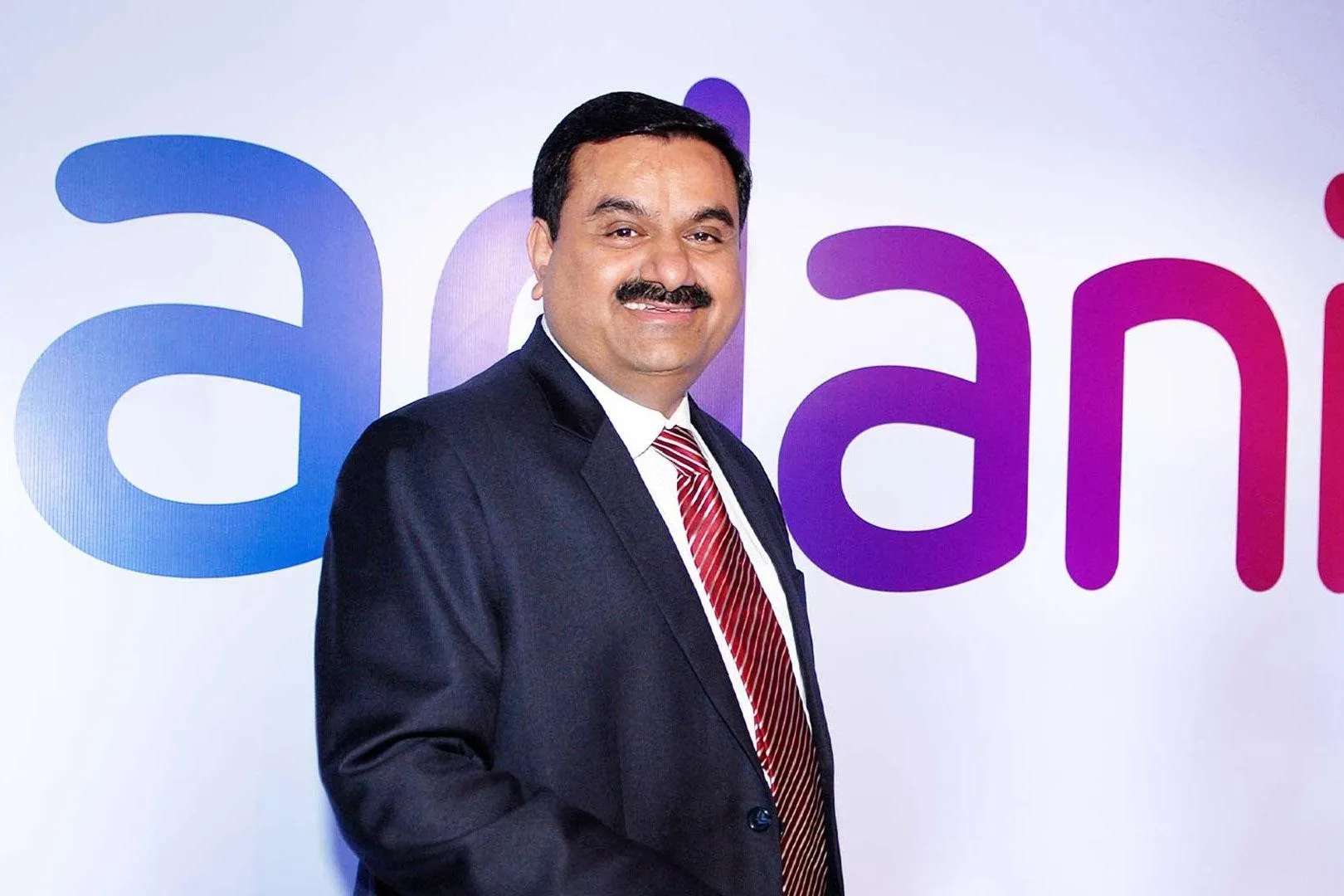
Adani Group’s entry into India’s airport sector is one of the more notable infrastructure expansion stories of the past decade. In 2019, Adani Enterprises entered the airport business without the long operating history of established private airport operators such as GMR. Yet Adani emerged as the highest bidder for all six airports offered under the government’s public-private partnership process.
Today, Adani Airport Holdings (AAHL) manages eight airports, including Mumbai and Navi Mumbai, and says its network handled 96.4 million passengers in FY2025-26, representing about 24% of India’s airport traffic. It also handles around 33% of the country’s air cargo traffic.
The important part of this story is not simply that Adani won the bids. The bigger business question is why the group was willing to make such high offers and how it planned to turn airport operations into a much larger business ecosystem.
When the government invited private companies to operate, manage and develop six Airports Authority of India airports in 2019, the airports were Ahmedabad, Jaipur, Lucknow, Guwahati, Mangaluru and Thiruvananthapuram. The contracts were awarded using a per-passenger fee model, meaning the winning operator offered the highest amount it would pay AAI for each passenger.
The bidding numbers show how aggressive Adani’s strategy was. Official government data records Adani’s bids at ₹177 per passenger for Ahmedabad, ₹174 for Jaipur, ₹171 for Lucknow, ₹168 for Thiruvananthapuram, ₹115 for Mangaluru and ₹160 for Guwahati. GMR’s bids were substantially lower at several airports, including ₹85 for Ahmedabad, ₹69 for Jaipur and ₹63 for Lucknow.
This is also where one important correction is needed. The original account sometimes refers to Bengaluru among the six airports, but the 2019 airport privatisation round covered Mangaluru, not Bengaluru. The official government record confirms the six airports.
At first glance, these bids look difficult to justify. Airport operations require large investments in terminals, runways, passenger facilities, security systems, baggage handling, parking and other infrastructure. At the same time, many airport charges are regulated, which limits how freely an operator can increase aeronautical fees.
The business model becomes clearer when an airport is viewed as more than a place where aircraft land and take off.
Airport income broadly comes from aviation-related activities as well as commercial activities such as retail, food and beverage, advertising, lounges, parking, duty-free shopping, cargo and other services. The second category can become increasingly important as passenger traffic grows.
That helps explain why scale matters. A company operating several airports can build common systems, negotiate with large brands across multiple locations and develop partnerships that would be harder to build around a single airport. The same logic can apply to technology, staff training, procurement and commercial operations.
Adani’s airport strategy then expanded beyond the original six concessions. In 2021, AAHL took control of Mumbai International Airport. AAHL currently holds a 73% stake in Mumbai International Airport Ltd, which in turn holds 74% of Navi Mumbai International Airport Ltd.
This created a different kind of network. The original airport concessions provided national reach, Mumbai added one of India’s most important aviation markets, and Navi Mumbai created additional long-term capacity in the same metropolitan region.
Navi Mumbai International Airport began commercial operations on December 25, 2025, and international flight operations started on July 15, 2026. Phase one provides capacity for about 20 million passenger movements, according to Adani Enterprises.
That makes Navi Mumbai important not only as another airport in the portfolio but also as part of a larger Mumbai aviation system. The company is already planning further capacity expansion as passenger demand and airline fleets grow.
The same approach can be seen in Adani’s plans for airport cities. In June 2026, Adani Airports announced more than ₹20,000 crore of planned first-phase investment across 655 acres, with about 22 million square feet of mixed-use development planned across Mumbai, Navi Mumbai, Ahmedabad, Lucknow, Jaipur and Guwahati. The proposed developments include hotels, retail, dining, offices and convention facilities.
This changes the commercial calculation. The airport itself remains the core infrastructure asset, but the surrounding ecosystem can create additional sources of business activity.
Recent numbers also show why non-aeronautical businesses are receiving attention. Adani Enterprises reported 16% year-on-year growth in aeronautical revenue and 53% growth in non-aeronautical revenue in Q1 FY2026-27.
For passengers, this can mean more retail, food, lounges, parking and other services around the airport. For brands, airports can provide access to a large and relatively concentrated consumer audience. For the operator, these activities can provide revenue streams beyond regulated aviation charges.
The strategy also fits Adani Enterprises’ wider business model. AEL describes its approach as a business incubation model in which emerging infrastructure businesses are developed and, in some cases, later separated into independent listed businesses. Its airport business operates through Adani Airport Holdings.
That does not mean an IPO or a listed subsidiary automatically creates free money for every new project. Large infrastructure groups still need to raise debt and equity, manage cash flows, meet concession obligations and maintain sufficient financial capacity. The important point is that a large corporate group can allocate capital across businesses and use different financing channels as individual assets mature.
The scale of the airport opportunity is also attracting institutional capital. In September 2026, AAHL announced agreements to raise about ₹9,825 crore, or roughly $1 billion, from investors including Temasek, BlackRock-managed funds, Alpha Wave Global and Premji Invest. The company said the funds would support airport expansion, airport-city development and non-aeronautical businesses, with the network expected to reach capacity for around 200 million passengers annually.
Earlier reports had put Adani’s planned airport investment through 2030 at around $15 billion, including new terminals, taxiways, runway expansion and upgrades across several airports. That figure was reported by Reuters from Bloomberg’s reporting in December 2025, while the company’s more recent disclosures provide specific funding and expansion plans.
The broader business lesson is therefore less about having airport experience on day one and more about how an infrastructure company can combine scale, capital allocation, network effects and adjacent businesses. Adani entered a sector where established operators already had operating experience, but its strategy was based on acquiring a large portfolio quickly and then building additional commercial activity around that network.
There are risks to this model as well. High concession payments create pressure to grow passenger traffic and commercial revenue. Airport expansion requires large amounts of capital, while demand, interest rates, regulation and airline capacity can all affect returns. Recent regulatory developments also show that non-aeronautical activities such as duty-free retail remain subject to Indian law and oversight.
For the brand value of an infrastructure group, airports provide a highly visible consumer-facing platform. For the creator economy and social media influence, airports offer a large physical environment where brands, digital experiences and premium consumer services can meet travellers. For business strategy, the bigger lesson is the value of building connected assets rather than treating every project as an isolated investment. And for passengers, the practical impact is that airport competition and investment can influence terminal quality, capacity, retail options, connectivity and the overall travel experience.
As observed in the latest company updates, Adani’s airport strategy is now moving beyond simply operating terminals toward a broader airport ecosystem involving aviation, cargo, retail, hospitality, commercial property and city-side development. The success of that model will ultimately depend on passenger growth, execution, capital costs, regulation and the ability to turn large infrastructure investments into sustainable cash flows.
The original question was how a group without a long history of passenger-airport operations could win such a large airport portfolio. The evidence suggests that the answer lies in a combination of aggressive bidding, access to group-level capital, rapid scale-building and a plan to monetise the wider ecosystem around airports rather than relying only on passenger fees.
Based on the latest company disclosures and publicly available reporting, these figures and plans reflect information available as of September 2026. Some investment plans are forward-looking and may change as financing, demand and project execution develop. Readers should refer to official company and government disclosures for final contractual, financial and regulatory details.
SOURCE: Review of recent online discussions and official platform signals.