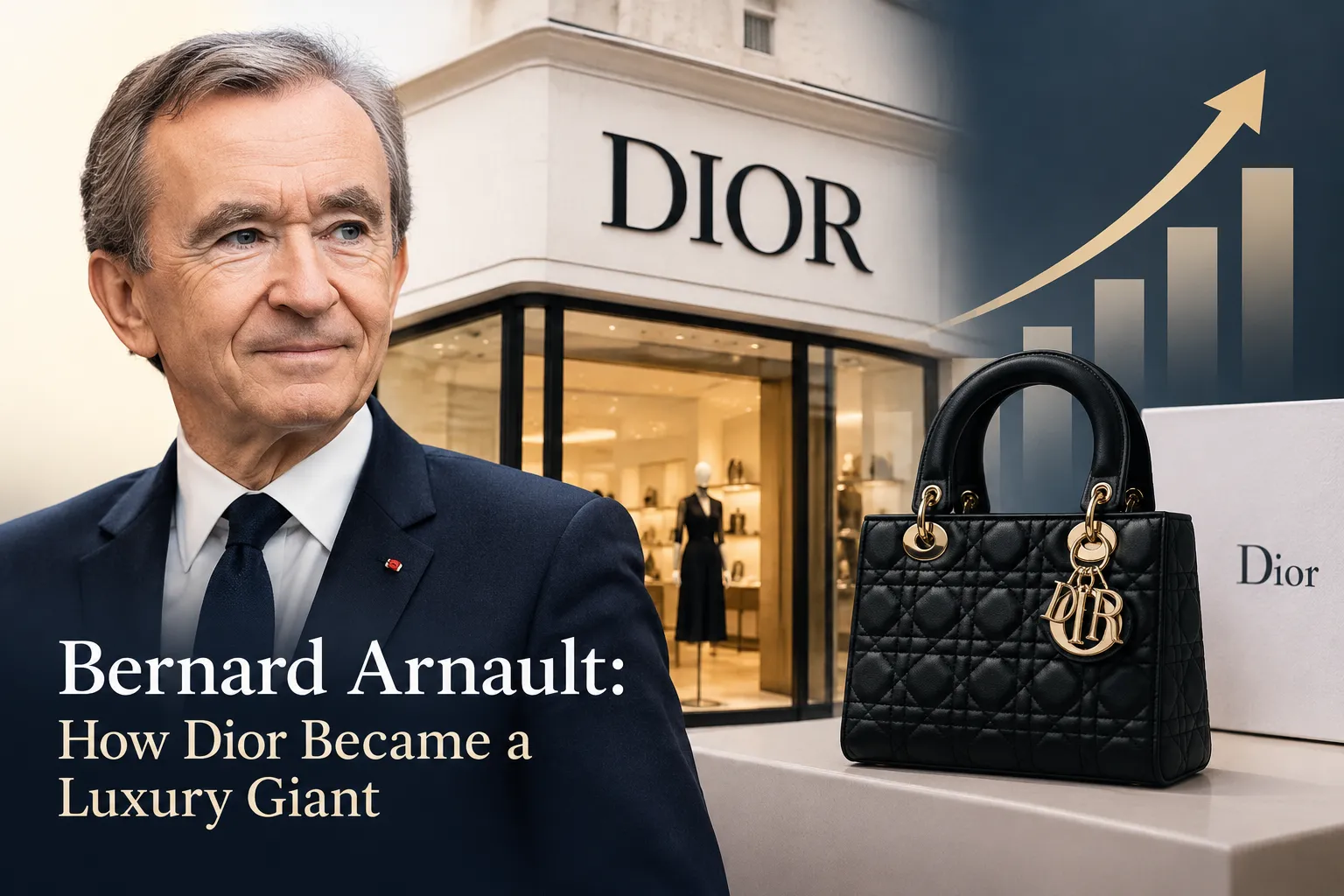
Bernard Arnault’s rise in the luxury industry is closely linked to one of the most important turnarounds in modern fashion. In the 1980s, the struggling Boussac group, which controlled Christian Dior, was facing major financial pressure, while its textile operations were losing money. According to the source material, the French government wanted to protect thousands of jobs and keep the business alive, creating a difficult situation for any potential buyer. Arnault, a real estate businessman with no major background in fashion at the time, saw an opportunity where others saw mainly risk.
The deal became the starting point for a business strategy that would later help make Arnault one of the most powerful figures in the global luxury industry. The important part of the story, however, is not simply the claim that Dior was acquired for one franc. The larger lesson is how Arnault viewed the assets inside a troubled company differently from the way the market viewed the company as a whole.
Boussac was more than Christian Dior. The group had textile factories, retail businesses, property and other brands, but several parts of the business were under serious financial pressure. The source explains that Arnault raised capital, took control of the group and then began separating the stronger assets from the weaker operations. Instead of treating the entire business as one unit, he looked at what each individual asset could be worth under different ownership and management.
That approach is important in corporate strategy. A company can be struggling while some of its individual brands, properties or intellectual assets remain highly valuable. In such situations, the real opportunity may come from restructuring the business rather than trying to save every part of it.
The transformation also came with a major cost. The source describes large-scale job cuts and the sale of several businesses and factories after Arnault took control. This remains an important part of the case because corporate turnarounds are rarely simple success stories. They can create value for shareholders and brands while also causing serious disruption for employees and communities.
Arnault’s most important move was arguably not financial restructuring, but the way he approached the Dior brand itself. The source argues that Dior had become too widely licensed, with the name appearing on a broad range of products. For a luxury company, that can create a serious brand problem. If a premium name becomes too common, customers may stop seeing it as exclusive.
Arnault’s strategy was to regain control over the brand. Instead of allowing the Dior name to appear everywhere, the business moved toward tighter control over products, distribution and brand presentation. This reflects a basic rule of luxury marketing: a premium brand must protect the reasons customers are willing to pay more.
This is where scarcity becomes important. Luxury companies do not compete only on product quality. They also sell identity, heritage, design, status and access. When a brand limits distribution and carefully controls how its products are presented, the product can become more than a physical item. It becomes a symbol of a particular lifestyle.
The source also highlights the role of celebrity influence in Dior’s growth, particularly the impact of Princess Diana and the Lady Dior handbag. Diana’s public appearance with the handbag helped create enormous attention around the product, turning an accessory into a recognizable part of fashion culture.
This shows why celebrity marketing can be so powerful in the creator economy and luxury sector. A product does not always need traditional advertising to gain attention. When a highly influential public figure is strongly associated with a product, consumers can begin to connect that product with the person’s image, lifestyle and social status.
The same basic idea later became important with younger audiences. Luxury brands increasingly worked with musicians, entertainers, athletes and other cultural figures to keep heritage brands relevant to new generations. The source points to Dior’s relationships with several major global personalities and brands as examples of how an established fashion house can remain connected to changing consumer culture.
This is a major business lesson. A brand that relies only on its history can eventually lose relevance. Heritage creates trust, but cultural relevance creates demand. The strongest luxury companies therefore have to protect their history while constantly finding new ways to make that history attractive to younger consumers.
The Dior case also helps explain the wider business strategy behind LVMH. Arnault did not build his position around one fashion label alone. His broader strategy involved bringing multiple luxury brands under one corporate structure while allowing individual brands to maintain their own identity. This created a large luxury portfolio covering fashion, beauty, watches, jewellery, wines and spirits and other premium categories.
From a business perspective, this model offers several advantages. A large luxury group can share capital, expertise and global distribution while allowing each brand to maintain its own image. It also reduces dependence on a single product category or consumer trend.
Brand value is another major part of the story. A luxury company cannot simply increase prices and expect customers to follow. Price increases work only when consumers continue to believe that the product offers something distinctive. That distinction can come from craftsmanship, design, heritage, limited availability, celebrity association, retail experience and social status.
This is why the Dior turnaround is relevant beyond fashion. The same principles can influence premium hotels, automobiles, watches, beauty products and even digital brands. Businesses that want stronger pricing power need to understand what makes their customers believe an offering is different from ordinary alternatives.
Social media has made this process even faster. In the past, a fashion house depended heavily on magazines, television and traditional celebrities to create attention. Today, products can gain global visibility through Instagram, TikTok, YouTube and other platforms within hours. That creates both an opportunity and a risk. More exposure can increase demand, but excessive exposure can also weaken the feeling of exclusivity that luxury brands depend on.
For consumers, the lesson is equally useful. A high price does not automatically mean higher quality. In luxury markets, consumers are often paying for a combination of product quality, design, brand history, scarcity, service and social meaning. Understanding this difference can help buyers make more informed purchasing decisions.
For businesses, the lesson is even bigger. Arnault’s success was not simply about owning Dior. It was about identifying where value was being destroyed, separating strong assets from weak ones, protecting the brand name and building demand around controlled access and cultural relevance.
The case also shows why brand management can have a direct effect on long-term business value. When a company protects its identity and builds strong customer demand, it can gain greater pricing power and stronger customer loyalty. That can support revenue growth and, over time, increase the economic value of the brand.
The story of Bernard Arnault and Dior therefore goes far beyond the often-repeated one-franc acquisition headline. The real business lesson is about seeing value where others see a failing company. Arnault inherited a troubled group, reorganized its assets and helped rebuild the position of Dior as a premium global name. The strategy combined financial restructuring with strict brand control, scarcity, cultural influence and long-term investment in luxury.
For the modern creator economy and social media industry, the message is clear: attention alone is not enough. The strongest brands turn attention into identity, identity into demand and demand into long-term brand value. Dior’s transformation shows how carefully managed exclusivity and cultural relevance can become powerful parts of a wider business strategy.
Based on the latest publicly available material reviewed for this analysis, some historical figures and specific claims in the source may require additional verification against company records, government documents and contemporary reporting. Readers should treat individual financial figures as source-reported unless independently confirmed.